
-

Newsletter

Elsewhere on the web
-




The Flags of Ernestina-Morrissey
Epilogue
It’s been almost five years since we celebrated Ernestina-Morrissey‘s many flags. (below) Her return to her homeport, New Bedford, brought questions about the flags flying on her masts. Most will recognize the new Cabo Verde flag and the Massachusetts and City of New Bedford flags (see below) But what was the blue flag on the foremast?
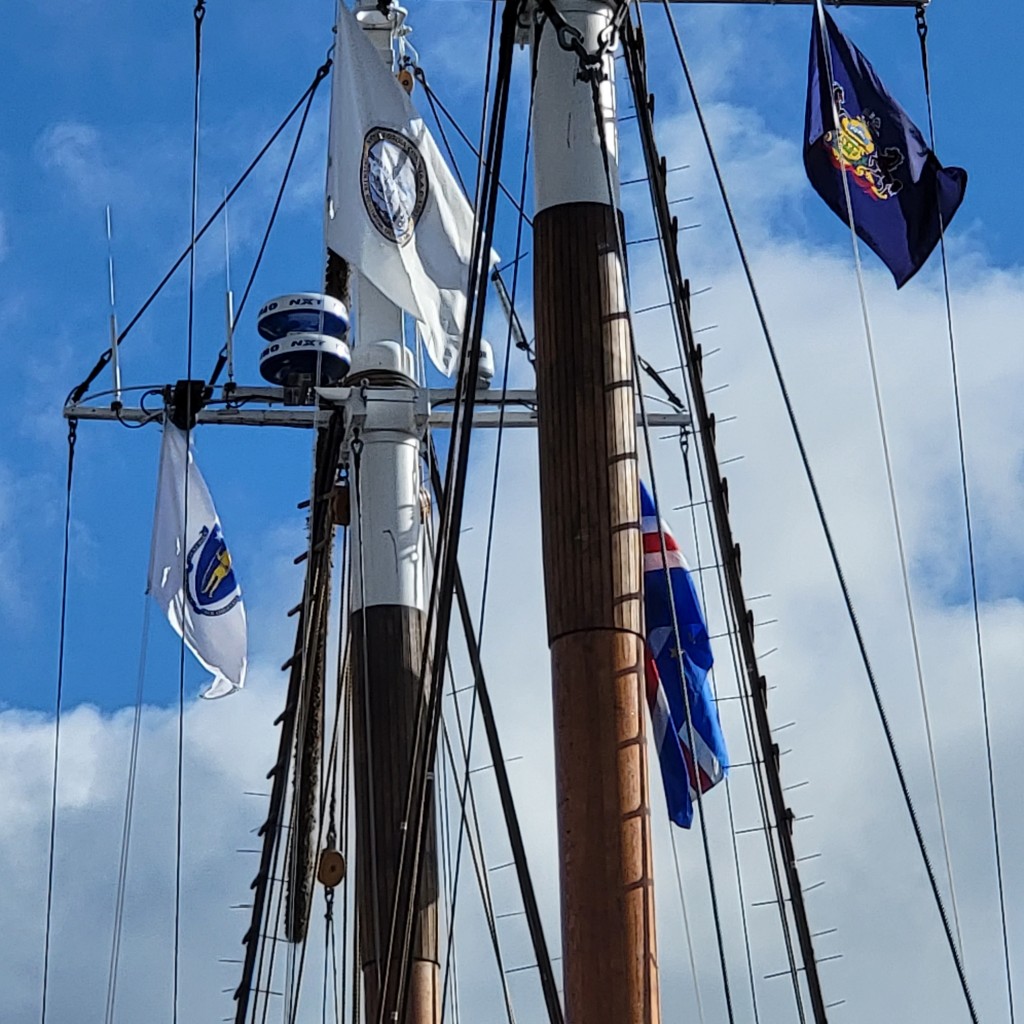
It is the “Captain’s flag”, the state flag of Pennsylvania, Captain Krihwan’s home state. Photo credit Melissa DeValles
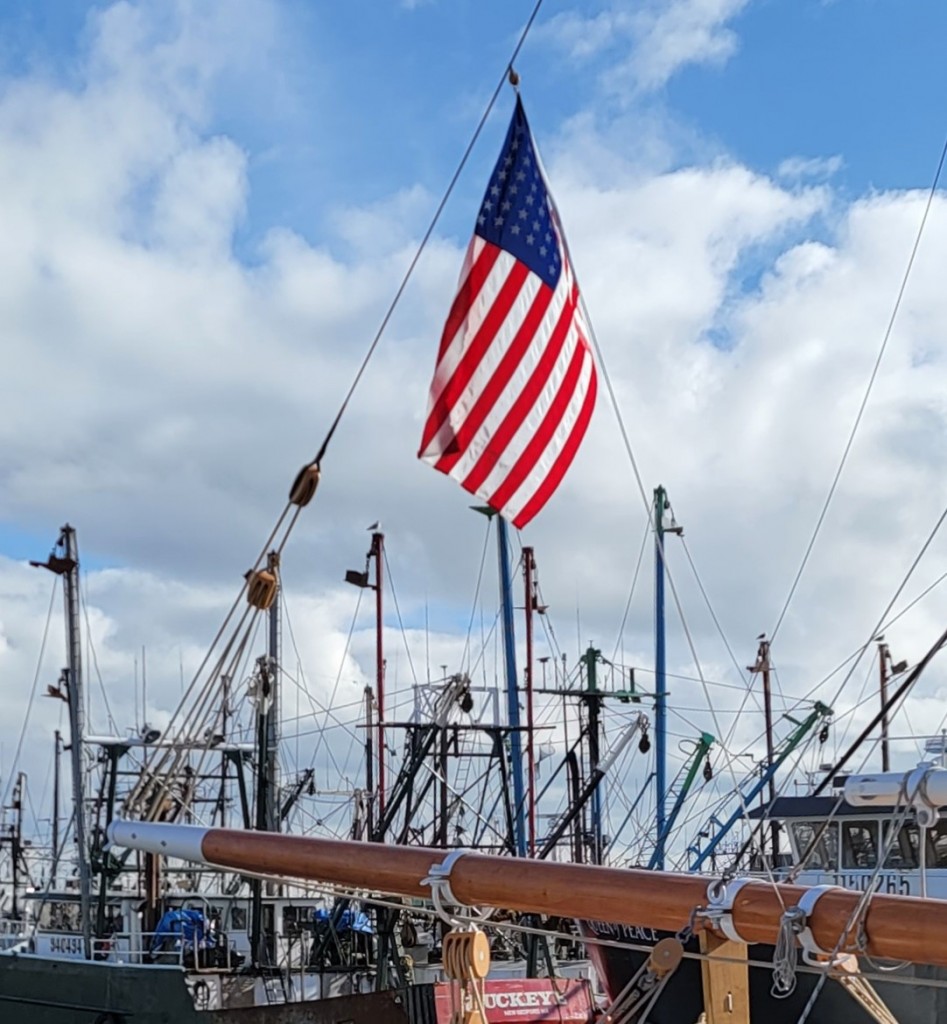
No one seemed to notice that the outer column looks like it is missing stars. Photo credit Melissa DeValles
No one seemed to notice that the outer column looks like it is missing stars. Photo credit Melissa DeValles
No one asked about the United States flag on a temporary halyard. If you looked carefully you can see it looked a little odd. It only has 44 stars and is the 1894 U.S. flag, representing the year Ernestina-Morrissey was first launched from Essex, Massachusetts!
The Rest of the Story
We celebrated Ernestina-Morrissey‘s 124th birthday in February 2018 at New Bedford Whaling National Historical Park. “One Ship – Many Lives!”
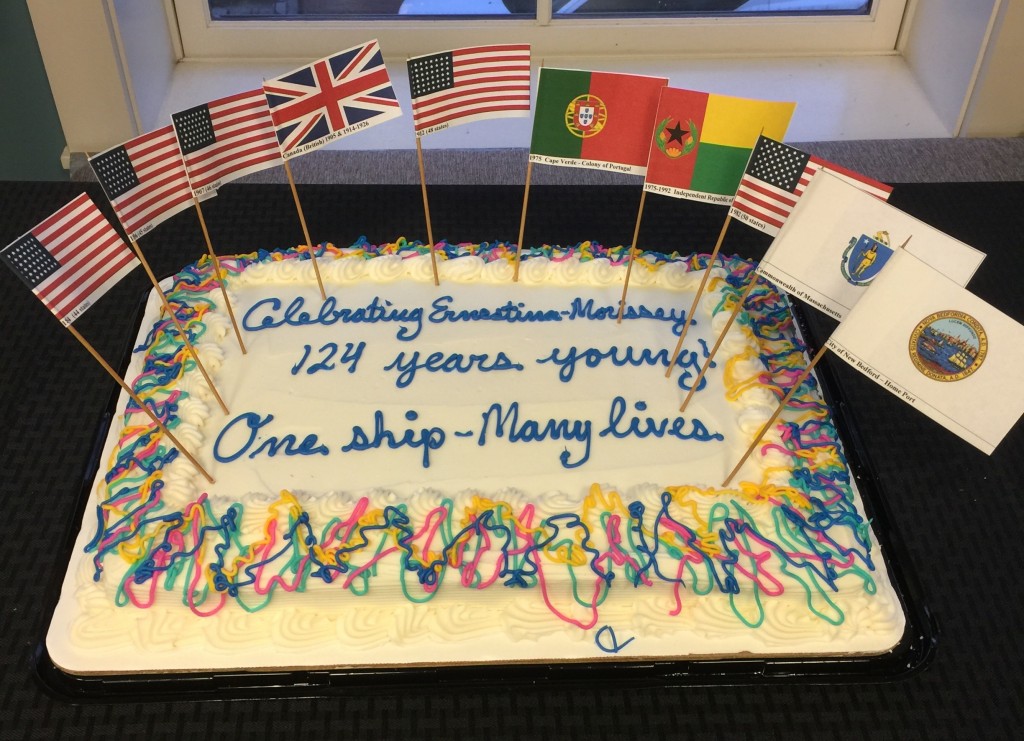
Why so many flags? The United States has added six states since Ernestina-Morrissey was launched.
Launched in 1894, Effie M. Morrissey started her fishing career.
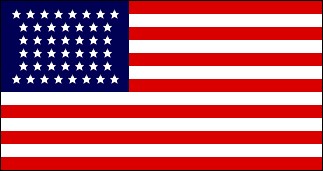
1894 - 44 states
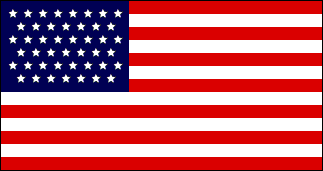
1896 - 45 states
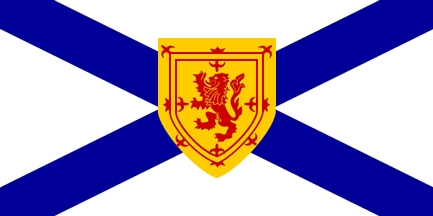
1906 Digby Nova Scotia owners
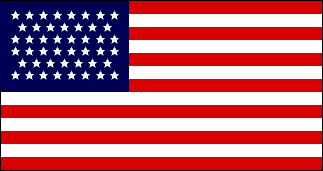
1907 - 46 states
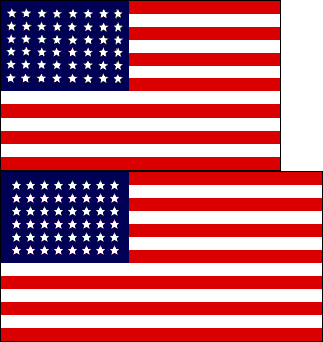
1912 - 48 states
In 1914 The Morrissey was bought by Newfoundlander Harold Bartlett.
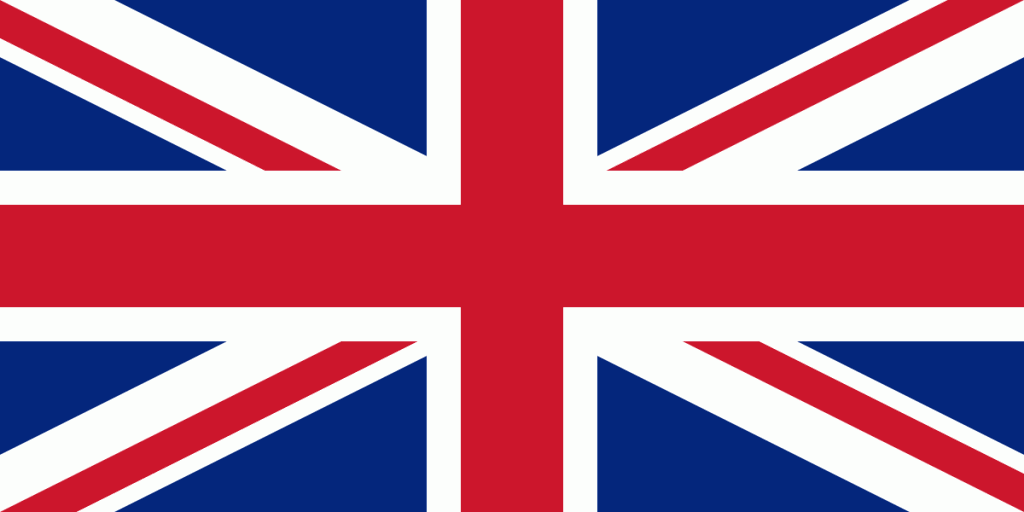
1914 - Newfoundland owner - British flag
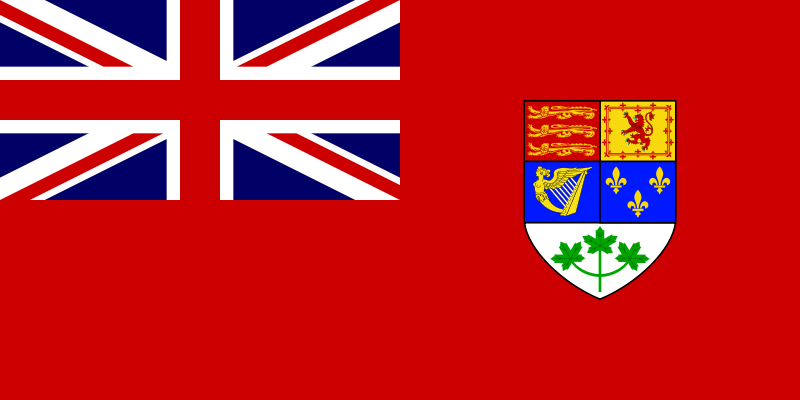
Dominion of Canada
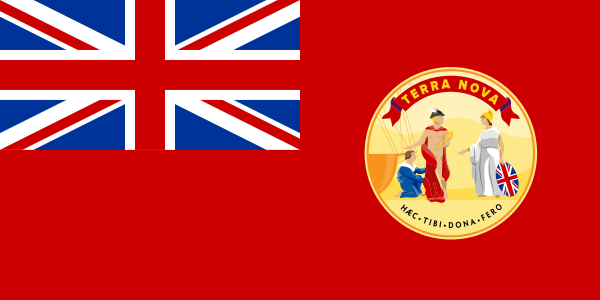
Dominion of Newfoundland
By 1926 Captain Bob Bartlett had bought the Morrissey from his cousin and was sailing her as an Arctic exploration vessel from New York. She carried the flags of many scientific institutions.
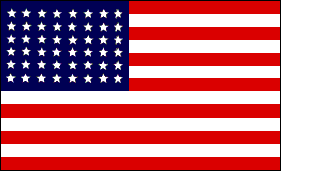
1926 - 48 states

National Geographic Society
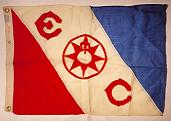
The Explorer's Club
After Bartlett’s death she was bought by Captain Henrique Mendes and sailed as her as Cape Verde (then a Portuguese colony) packet, renamed Ernestina.
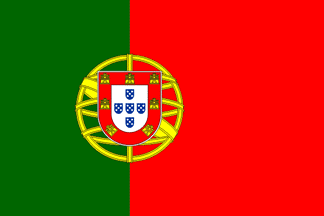
1948 - Cape Verde - Colony of Portugal

1975 - The independent Republic of Cape Verde
In 1982 the Ernestina was returned to Massachusetts as a gift to the people of the United States from the people of Cape Verde with a home port of New Bedford..
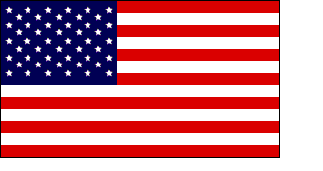
1982 - 50 states
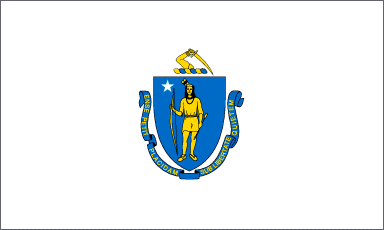
1982 - Commonwealth of Massachusetts
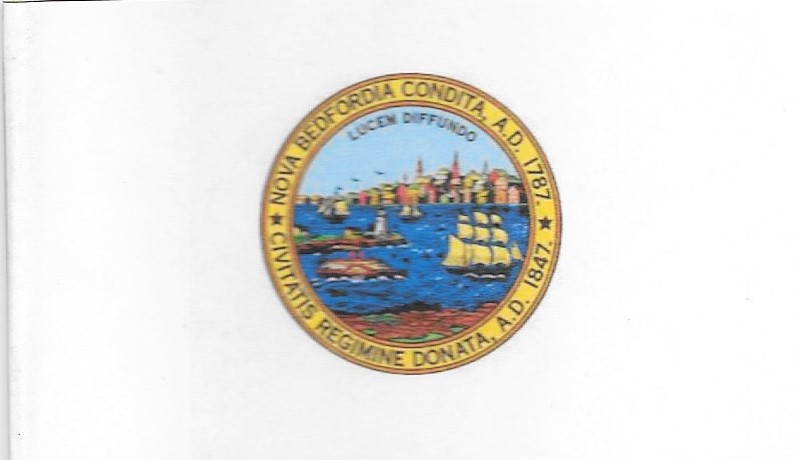
1992 - City of New Bedford – Home Port
From 1982-2014 Ernestina ex Effie M. Morrissey served as an educator and ambassador. In 2014, renamed Ernestina-Morrissey, and supported by a public-private partnership, the vessel was delivered to Boothbay Harbor Shipyard to be rehabilitated to prepare her for her future service to the Commonwealth and the world.
This entry was posted in Historical Resources, News. Bookmark the permalink.
First Plank Is In!
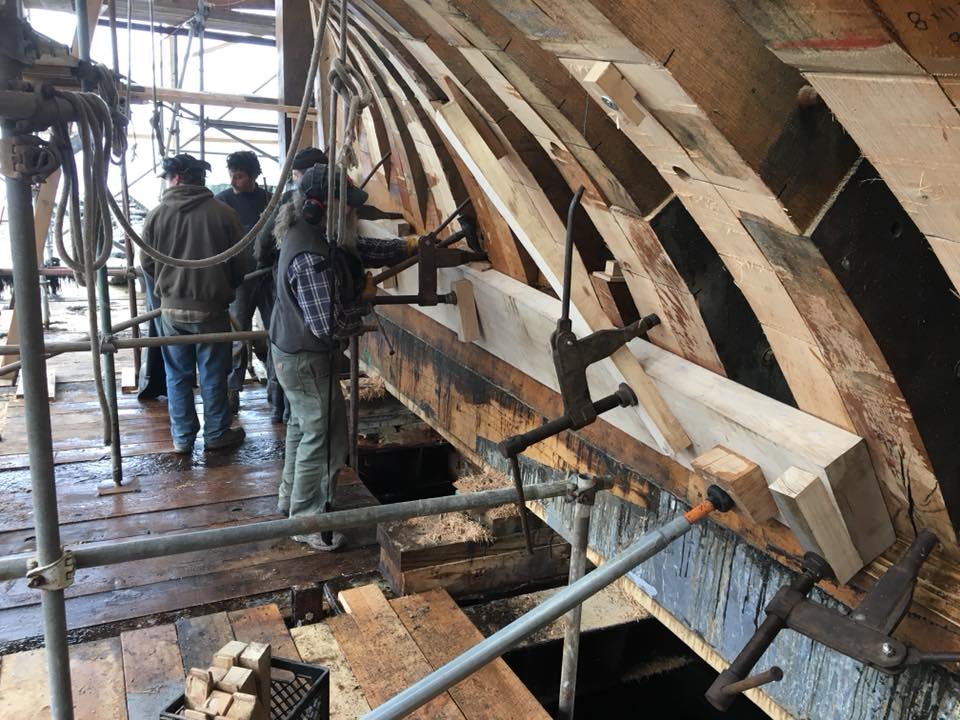
First garboard plank, Photo Credit: Bristol Marine http://www.bristolmarine.com/
The first new plank is in place on Ernestina-Morrissey’s frame. The planks closest to the keel make up the garboard strake. When the the keel was put in place the top was beveled, as you can see below, to receive the garboard. The garboard strake will be 5 inches thick at the mid-ship frames and tapered to 3 inches thick toward the stern post. The first broad strake (the next planks above the garboard strake) will be tapered until the planks are all 3 inches thick and the rest of the planking will be 3 inches thick. The Danish oak. purchased in 2015 is being used for the planks.
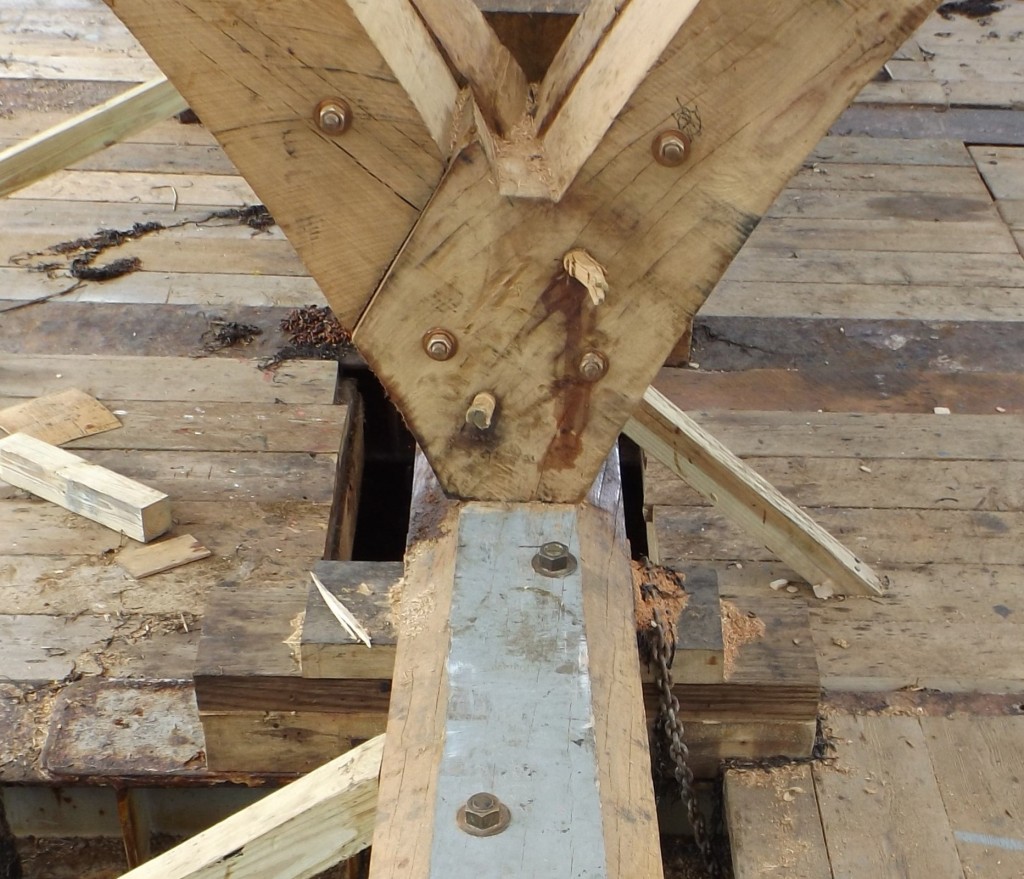
This photo from 2016 shows is the first frame that rests directly on the keel. The cant frames are aft of it rising along the stern structure. You can see the bevel in the keel.
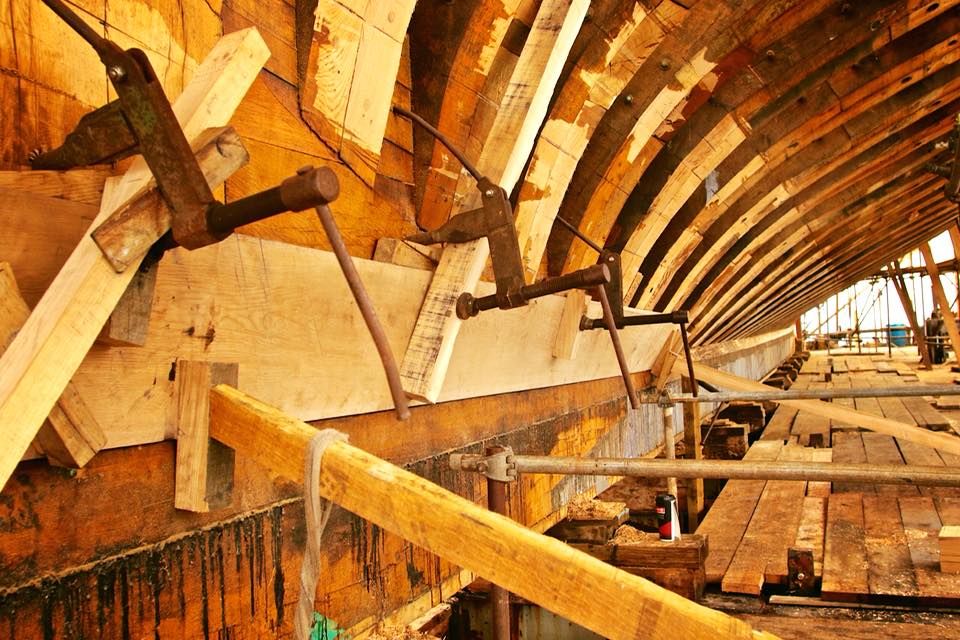
Another view looking forward showing the first plank in place at the stern. photo credit Bristol Marine http://www.bristolmarine.com/
This entry was posted in Maintenance and Operations Committee, News. Bookmark the permalink.
New Year in the Shipyard
There is more than the work on Ernestina-Morrissey that is new in Boothbay Harbor as 2018 begins. Andy Tyska, president of Rhode Island-based Bristol Marine, has announced the acquisition of Boothbay Harbor Shipyard, now called “The Shipyard in Boothbay Harbor”. Tyska said “… I know that Eric (Graves, vice-president) together with the yard’s talented shipwrights and skilled workers, will build on … past success and effect improvements ….”
Bristol Marine has posted a great video on their Facebook Page taken about a month after the photos below. You can see many more stanchions are in.
SEMA director Captain Willi Bank visited the yard in early January and sent along these photos that show the sheer restored and other details and progress of the Phase 1 work.
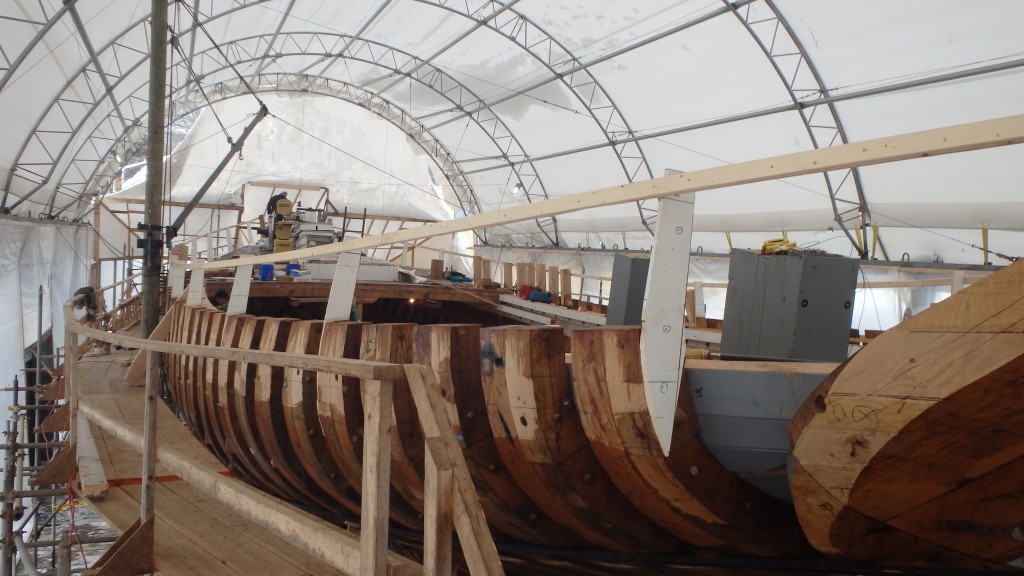
From the port quarter looking toward the bow you can see Ernestina-Morrissey will have her historic sheer back.
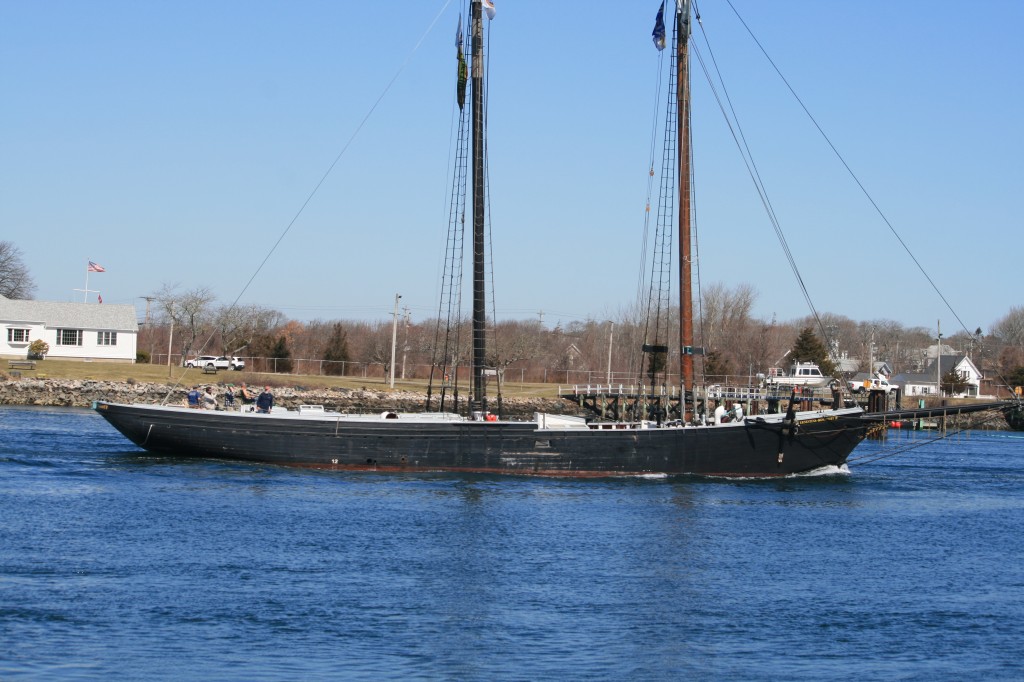
Sheer (line) is a term to describe the curve upward toward the bow and stern of a vessel's main deck. You can see in this photo of Ernestina-Morrissey in the Canal on the way to BHS in April 2015 how flat the line of her stern is. With the reconstructed stern, the boat will again have the traditional sheer of an 1894 Essex schooner.
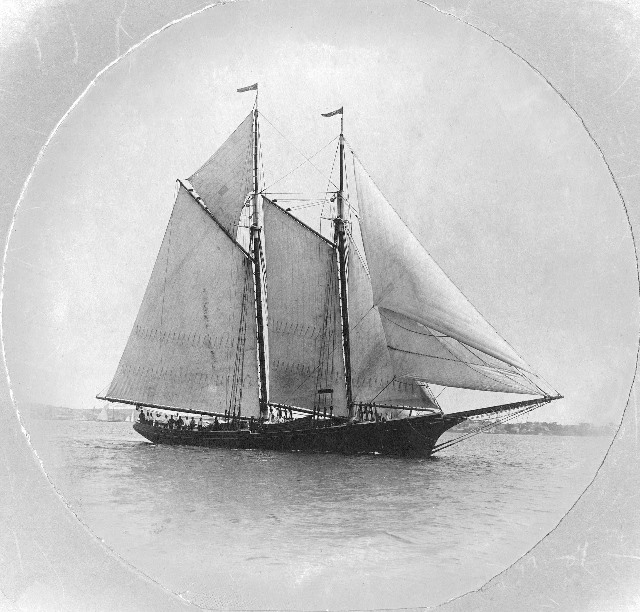
Here's what Effie M. Morrissey looked like just before she headed out for her first trip to the Banks, 6 weeks after she was launched. You can compare this with the photo above. The bow's sheer was restored during the 2008-09 work.
You can see the condition of her stern when they started work in 2015 here.
On the far right of the first photo above you can see some of the transom framing. The next photo is from the starboard side of the transom looking forward.
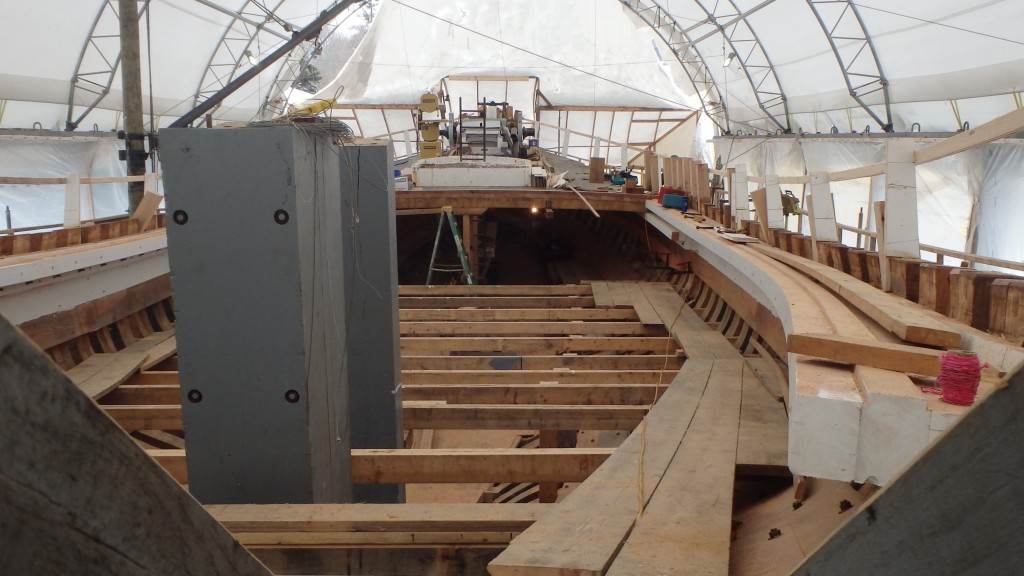
The gray vertical timbers on the center-left are the rudder and stern post. Running along the inside of the frames from the transom forward is the sheer shelf installed above the sheer clamp on the port and starboard sides.
The foredeck provides a different view of the sheer clamps looking aft.
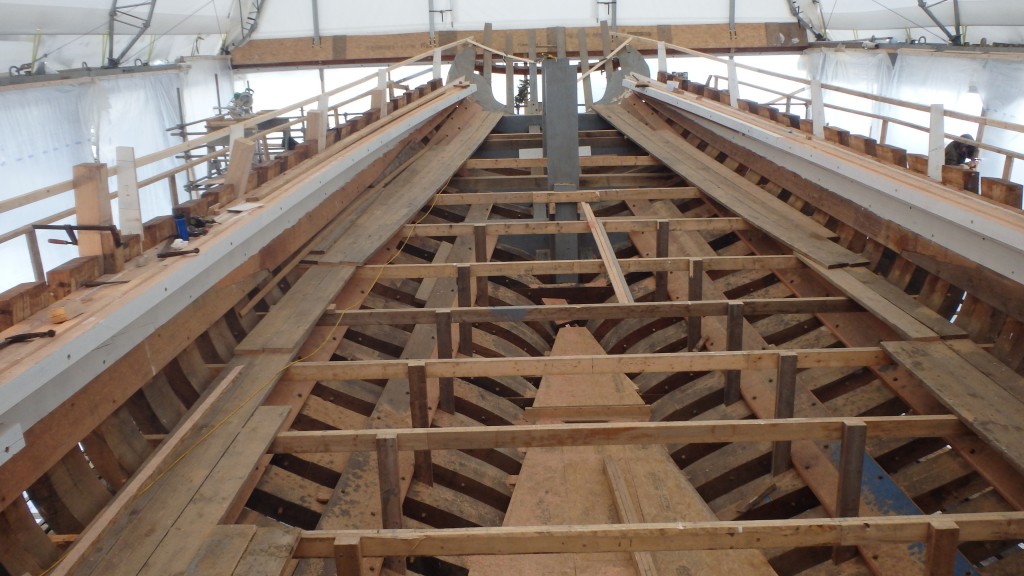
Besides the sheer clamps along the top of the frame you can see the stringers which add stability to the frame. There is a lot of temporary structure here, including the staging, the horizontal supports, and the plywood "sole" over the floor timbers.
A look from midships gives another perspective.
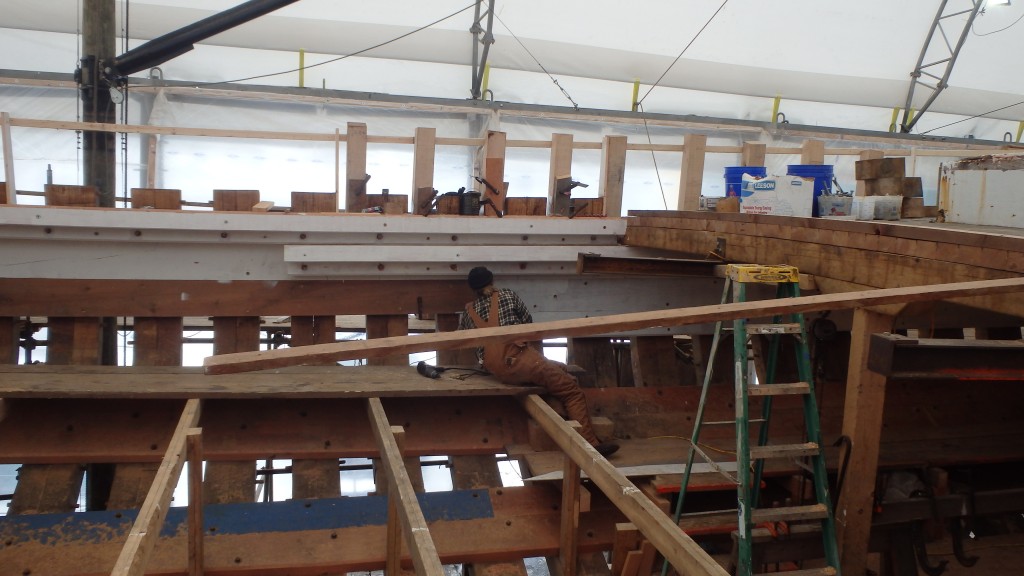
Looking to the port side, the deck beam on the right is at the break in the deck. The top-timbers or stanchions which will support the bulwarks are going in between the frame ends, fastened to the sheer clamp. Again, you can see the stringers. You can also see the bronze bolts which hold the sheer shelf structure together.
Tom is working on the starboard side forward.
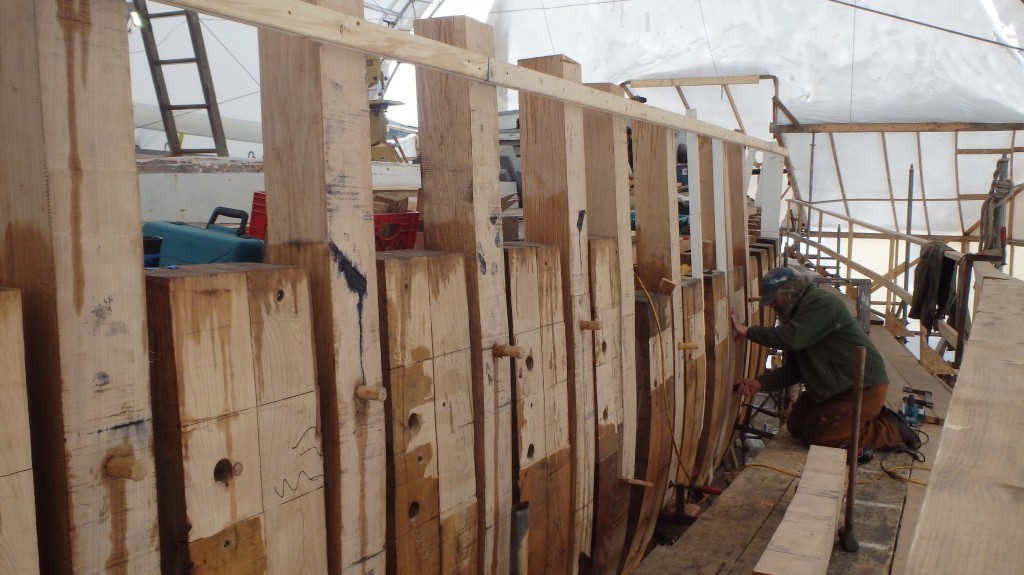
As you can see the stanchions are trunnel fastened. The holes in the frames, which will be bunged, are where the bronze bolts hold the frames to the sheer clamp. The trunnels, now proud. will be chiseled level with the surface of the stanchion.
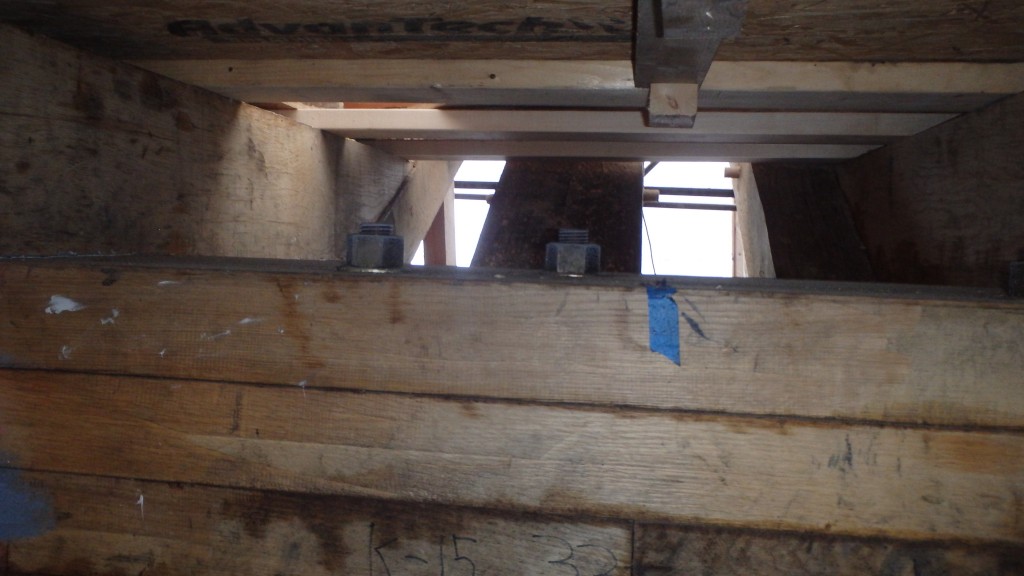
Take a close look at the laminated keelson. The bronze nuts are weathering in the damp, frosty weather. These nuts top the the bronze rod keelbolts, which in this case go from the top of the keelson down through the "hockey stick" ends of the two overlapping futtocks then through the oak keel timber and depending on the position, the lead ballast-keel. On the left and right, on top of the keelson you can see a floor timber topped by temporary plywood. Here the keelbolts go through the floor timbers as well as the rest of the structures. There are two keelbolts for each frame one through each futtock.
Follow this link to This photo from 2016 showing the “hockey stick” ends of the two overlapping futtocks.
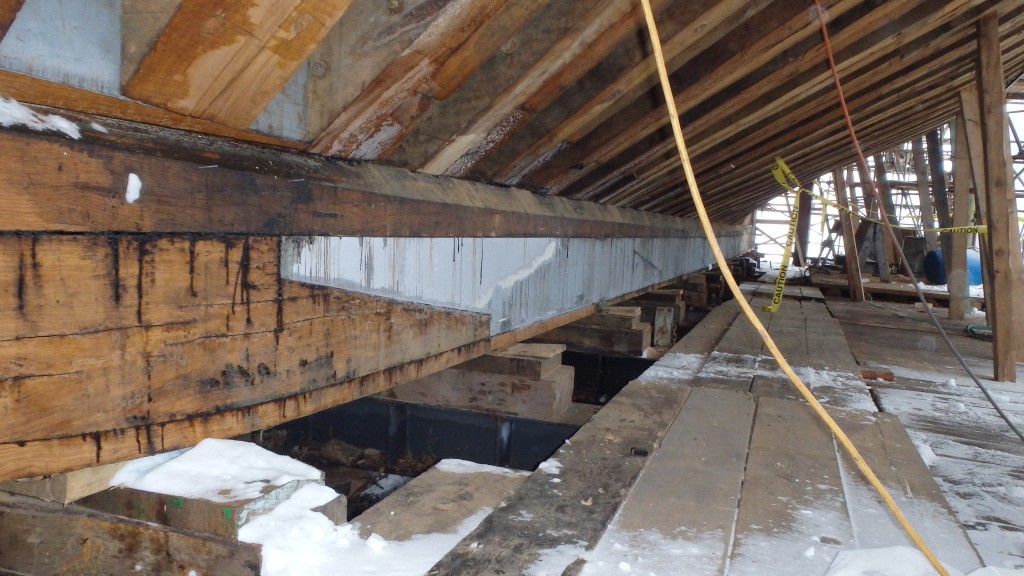
Here you can see the oak keel with the lead ballast-keel inserted for part of its length.
Forward, under the foredeck, these large timbers bolted on either side of the keelson are bolsters for the foremast step.

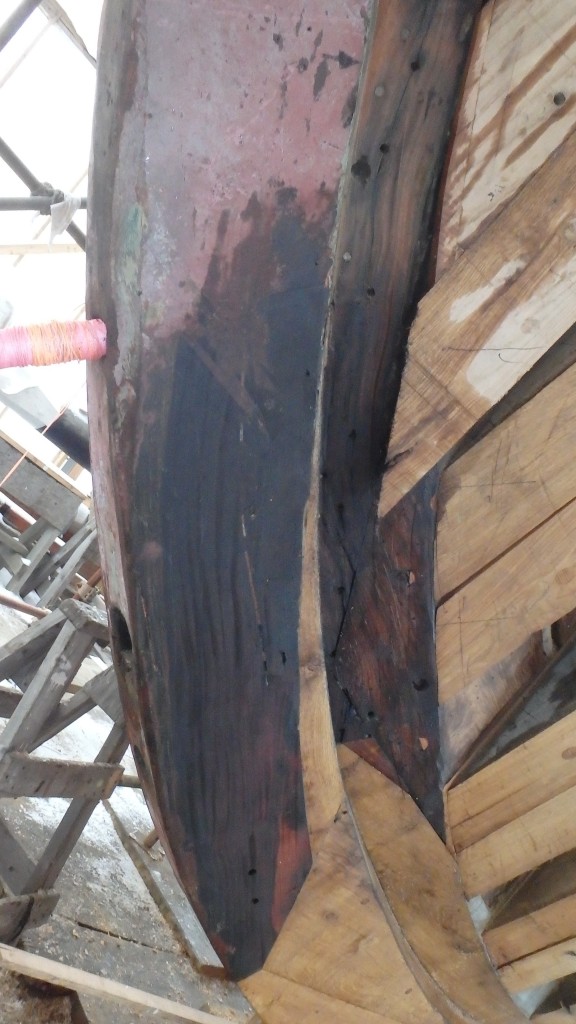
People ask “Is there any old wood left?” The photo below shows the African hardwood stem, installed in Cape Verde, expertly scarfed with new oak by BHS shipwrights. I think it’s beautiful and represents the ongoing evolution of Ernestina-Morrissey, “The Phoenix of the Seas”
And finally, here is her original registration number assigned in 1894 when Ernestina-Morrissey was launched from Essex, Massachusetts to fish for the J.F. Wonson and Co.
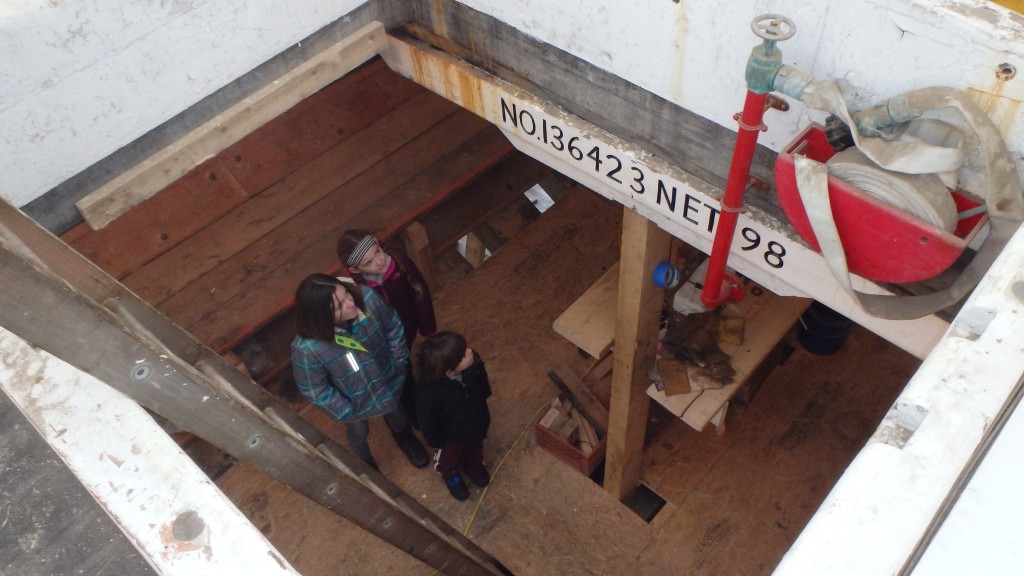
Although the vessel was under different registries during her many lives, Julius Britto worked with Representative Gerry Studds to authenticate her Essex Massachusetts heritage and with an Act of Congress the original registration number was restored to the then Ernestina in 1982.
*
You can review all the posts about the Rehabilitation Project HERE.
*
You can join the crew supporting this amazing project. DONATE TODAY!
This entry was posted in Maintenance and Operations Committee, News. Bookmark the permalink.
2017: A Year in Review
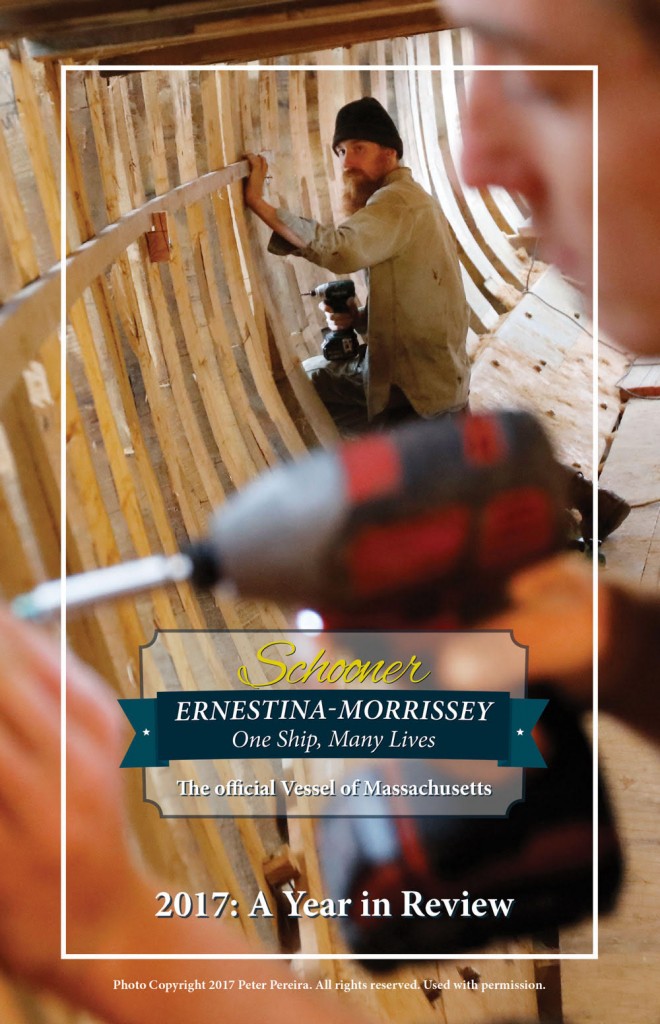
Thank you Peter Pereira for your great photos! See the SouthCoastTODAY article .Copyright 2017, Peter Pereira/The Standard-Times. All rights reserved. Used with Permission.
March 2017: The crew works to construct the laminated keelson. The double sawn timber frames are fastened with wooden trunnels and silicon bronze bolts.

photo credit: Fred Sterner
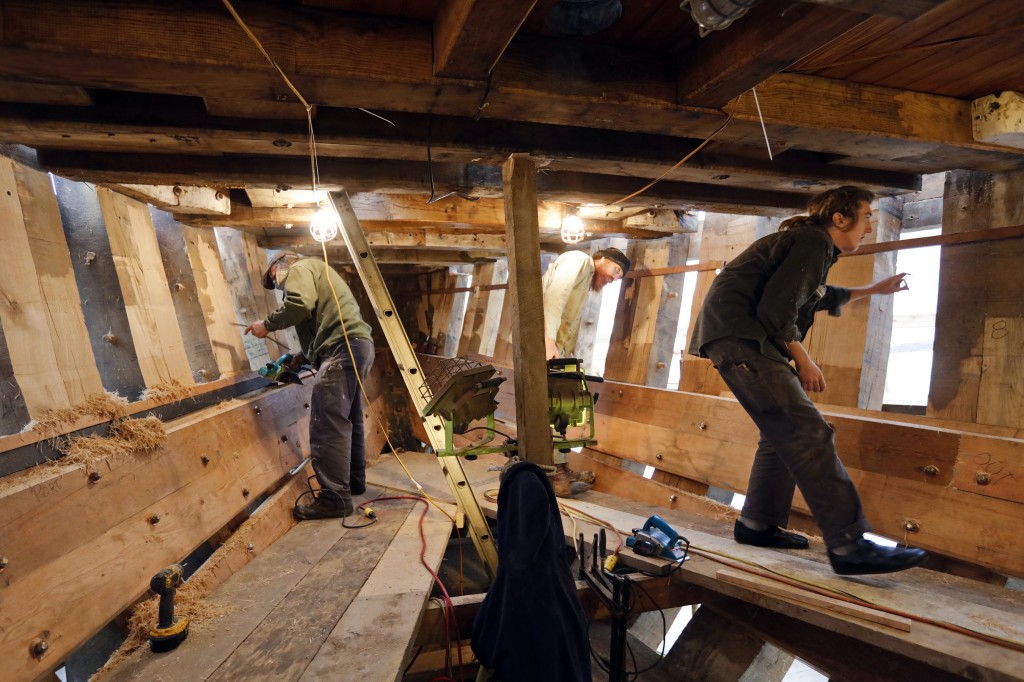
By October there has been much progress on the hull. Here workers are fairing frames for the next course of internal planks, “stringers”, which strengthen and stabilize the hull. Copyright 2017, Peter Pereira/The Standard-Times
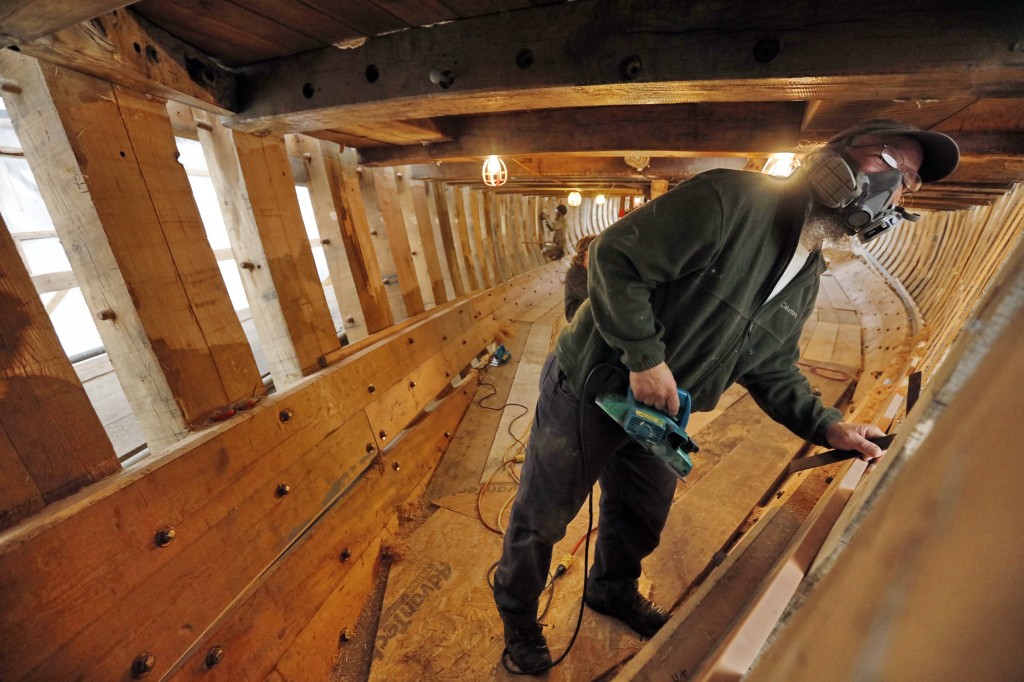
The view from under existing foredeck looking aft showing the double sawn Danish and live oak frames and the newly installed horizontal “stringers”. Copyright 2017, Peter Pereira/The Standard-Times
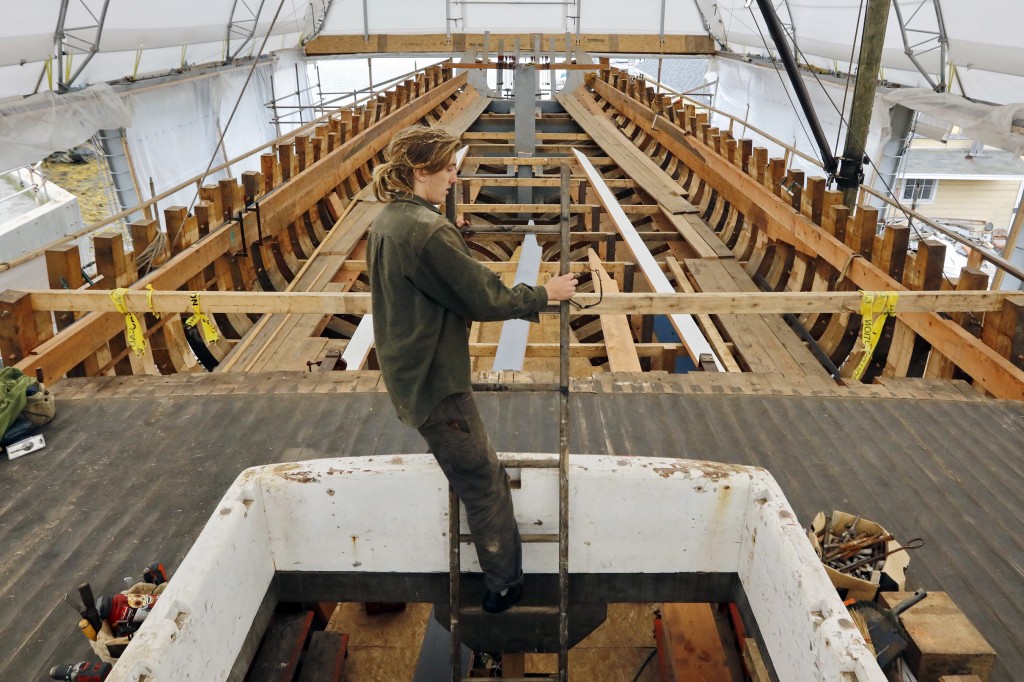
Looking aft you see the great progress made since March. Keelson, clamps and stringers are complete and once the deck framing is in place the work on the deck will start. Copyright 2017, Peter Pereira/The Standard-Times
This entry was posted in Maintenance and Operations Committee, News. Bookmark the permalink.
Welcome Aboard, Robin Shields!

Robin Sheilds here with son Ben, husband Tim and daughter Abby!!!
SEMA is pleased to announce that Robin Shields has joined their staff as a fundraising consultant.
Robin joins the crew following a successful stint as the Executive Director of the Sippican Lands Trust in Marion, MA. She brings with her expertise in fundraising, educational programming and community engagement.
A New Englander her entire life, Robin and her family moved back to Marion five years ago. Both a Tabor Academy and a Dartmouth College graduate, she is an avid sailor and can often be found on Buzzards Bay with her family aboard their sailboat “Meltemi.” Robin worked for Maine’s Hurricane Island Outward Bound School for many years as a sailing instructor and during that time received her 100 ton Coast Guard License. In addition, she got a Masters in Marine Policy at the University of Rhode Island and worked as part of the Buzzards Bay Coalition’s water quality monitoring program.
Robin is excited to join SEMA and undertake her goal to help raise the monies needed to complete the ongoing restoration campaign for the Schooner Ernestina-Morrissey. “The vessel has an incredible history; a great story to tell,” she said. “As the official Vessel of Massachusetts, the Ernestina-Morrissey will undoubtedly have a positive impact on many more generations to come as a sail training vessel and an educational connection to the waters of Buzzards Bay and beyond. I am honored to play a small part of her story”, Shields said.
This entry was posted in Fundraising, News. Bookmark the permalink.
A Visit to the Shipyard
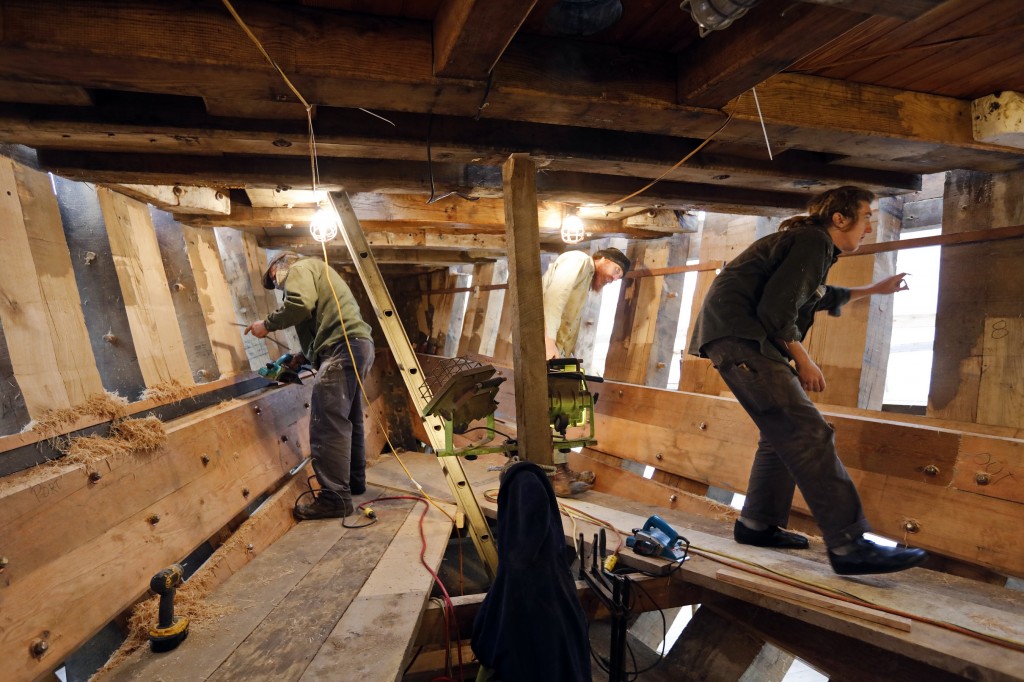
Here workers are fairing frames for the next course of internal planks stringers which strengthen and stabilize the hull. [Peter Pereira/The Standard-Times/SCMG
This entry was posted in Maintenance and Operations Committee, News. Bookmark the permalink.
We Are Cabo Verde Gala Held in Boston
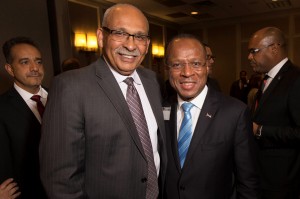
SEMA Director Mike Gomes and Cape Verde Prime Minister Ulisses Correia e Silva
Schooner Ernestina Commission chair Licy DoCanto was a keynote speaker at the We Are Cabo Verde Gala in Boston on September 30, featuring both the President Jorge Carlos Fonseca and Cape Verde Prime Minister Ulisses Correia e Silva along with elected officials and community leaders and others from across New England. DoCanto’s remarks highlighted the important work of the Commission, and the efforts being made by many in the public and private sectors in support of the Schooner, and was followed by a video of the Schooner.
This entry was posted in News. Bookmark the permalink.
Thank you, Governor Baker!
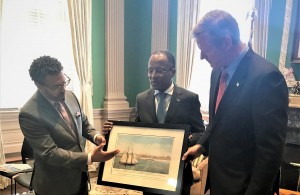
(L to R) Commission chair Licy DoCanto, Cape Verde Prime Minister Ulisses Correia e Silva, and Governor Charlie Baker
During a recent visit, Schooner Ernestina Commission chair Licy DoCanto and Cape Verde Prime Minister Ulisses Correia e Silva, presented a framed print, by New Bedford artist Arthur Moniz, of the Schooner Ernestina-Morrissey to Massachusetts Governor Charlie Baker. The print was engraved with the following inscription: “To Governor Charlie Baker and the People of the Commonwealth of Massachusetts, We Thank You for your Unwavering Commitment and Support for the Beloved Schooner Ernestina-Morrissey – With Gratitude from The Republic of Cabo Verde and the Massachusetts Schooner Ernestina Commission”
This entry was posted in News. Bookmark the permalink.
Thank you Gene Monteiro
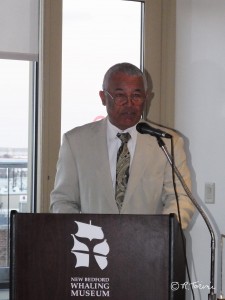
This entry was posted in News. Bookmark the permalink.
“We are getting a SUPERIOR SHIP”
SEMA President Julius Britto visited Boothbay Harbor Shipyard this week to view the progress and confer with Harold Burnham and David Short. His response? ”We are getting a SUPERIOR SHIP when ERNESTINA-MORRISSEY leaves Boothbay Harbor Shipyard.”
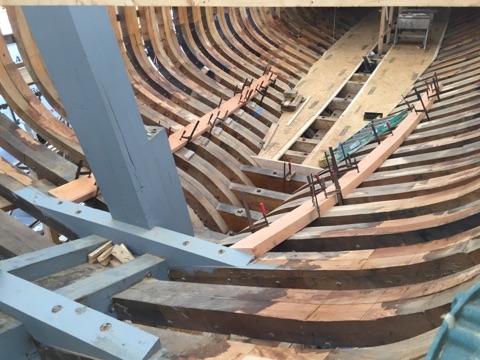
The floors are all in and a temporary platform will provide a work surface.
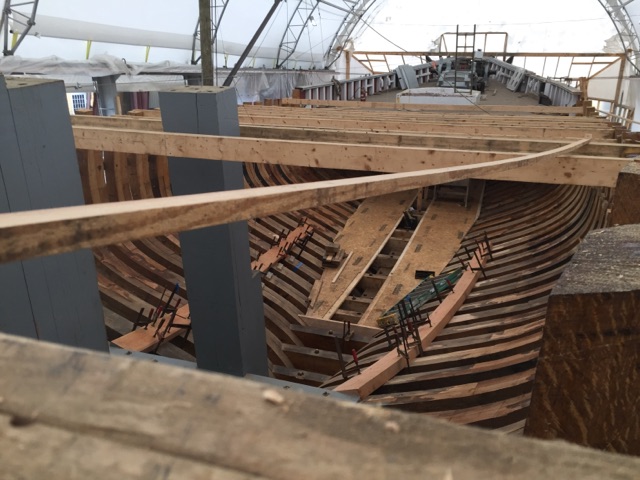
Installing the stringers and clamps is next
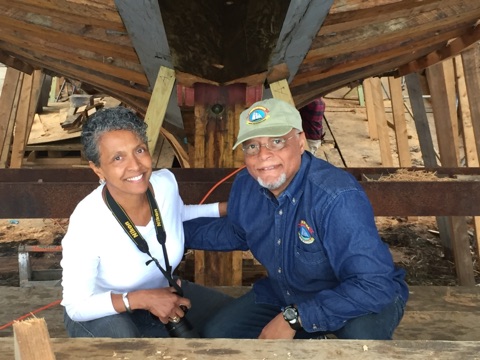
Sandra and Julius Britto excited to see the progress on Ernestina-Morrissey
Julius expressed gratitude for everyone’s hard work.
This entry was posted in Maintenance and Operations Committee, News. Bookmark the permalink.
